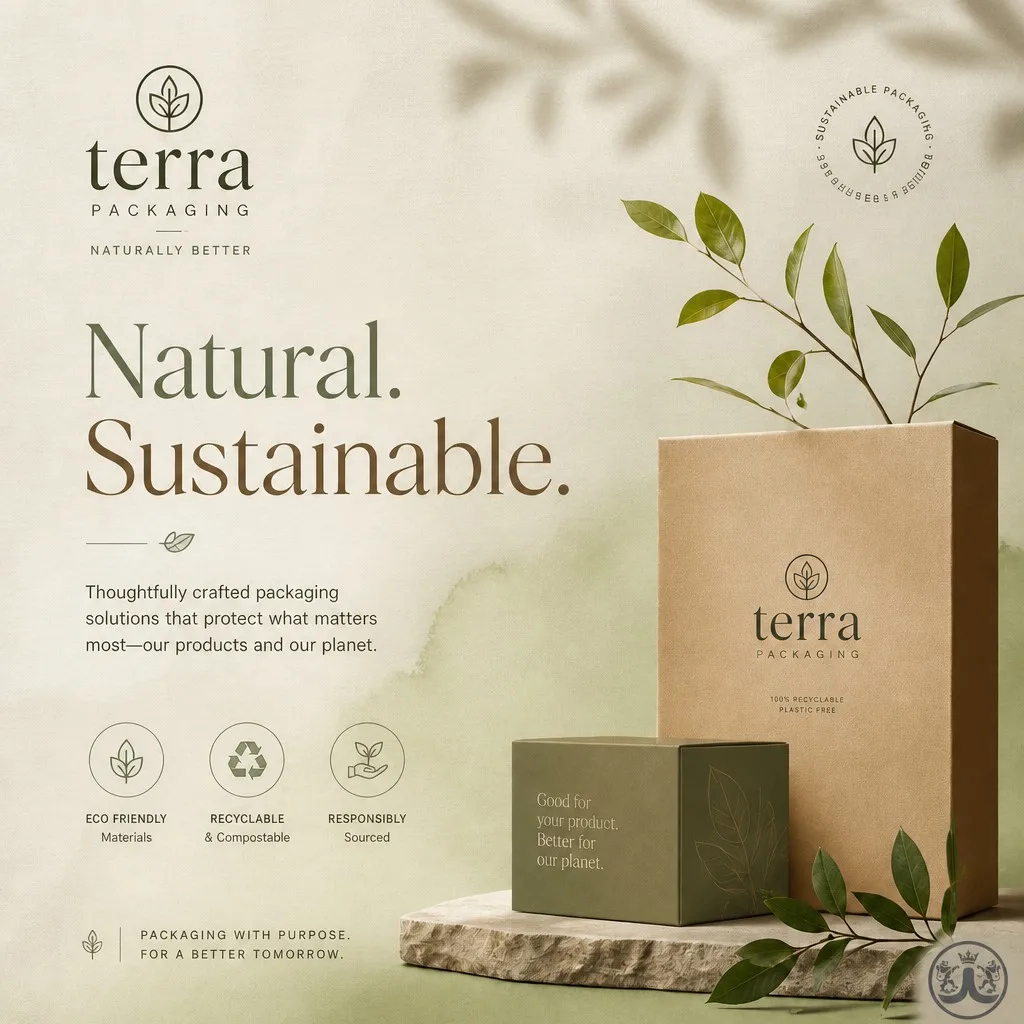
In the evolving landscape of 2026, the visual identity of a brand is no longer just about aesthetics; it is a statement of ecological responsibility. Sustainable Printing Design has emerged as a critical discipline where graphic design meets environmental science. By adopting a minimalist approach, brands can significantly reduce their material footprint while creating a more premium, high-trust visual experience for the modern consumer.
1. The Philosophy of Less: Minimalist Graphic Design
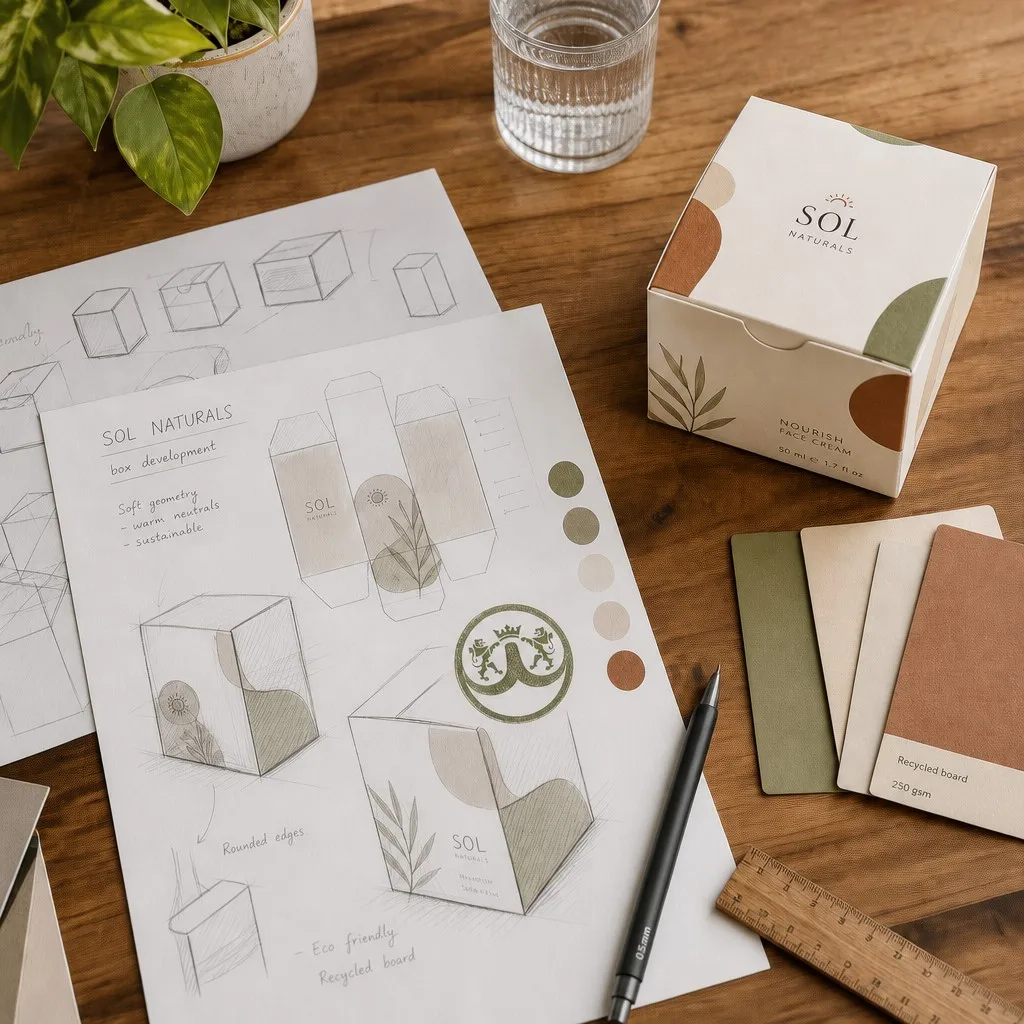
Minimalism in sustainable printing design is not about a lack of creativity—it is about intentionality. Every line, color, and element is chosen for its impact and its necessity.
- Reduced Visual Noise: A clean, minimalist layout allows the quality of the sustainable substrate (like Kraft paper) to speak for itself.
- Clarity of Message: By removing unnecessary decorations, the core brand message and eco-certifications (like FSC™) become the focal points of the packaging.
2. Optimizing Ink Density for Environmental Impact
Ink production and disposal have a significant environmental cost. Professional sustainable printing design focuses on “Ink Optimization”—achieving full visual impact with minimal coverage.
- Vector Over Raster: Whenever possible, using vector-based shapes and lines reduces the complex gradients that require heavy ink layering.
- Thoughtful Color Selection: Designers are now choosing colors that have high visibility with lower saturation, ensuring that the brand pops without overloading the paper fibers with pigments.
3. Whitespace as a Critical Design Element
In traditional design, whitespace was often viewed as “empty.” In sustainable printing design, whitespace is a functional tool.
- Material Showcase: Large areas of whitespace highlight the raw, natural texture of eco-friendly materials, which is a major trend in 2026.
- Reduced Chemical Load: Every square centimeter left unprinted is a square centimeter that doesn’t require de-inking during the recycling process, making the circular lifecycle more efficient.
4. Typography & Readability in Eco-Conscious Layouts
The choice of font affects more than just look; it affects ink consumption.
- Eco-Friendly Fonts: Some modern typefaces are designed with microscopic holes or thinner strokes that maintain readability while using up to 25% less ink.
- Hierarchy and Scale: Using bold typography for headers instead of large color blocks is a staple technique in sustainable printing design, creating a strong visual hierarchy without the heavy ink load.
5. Digital Workflow: Precision from Screen to Substrate
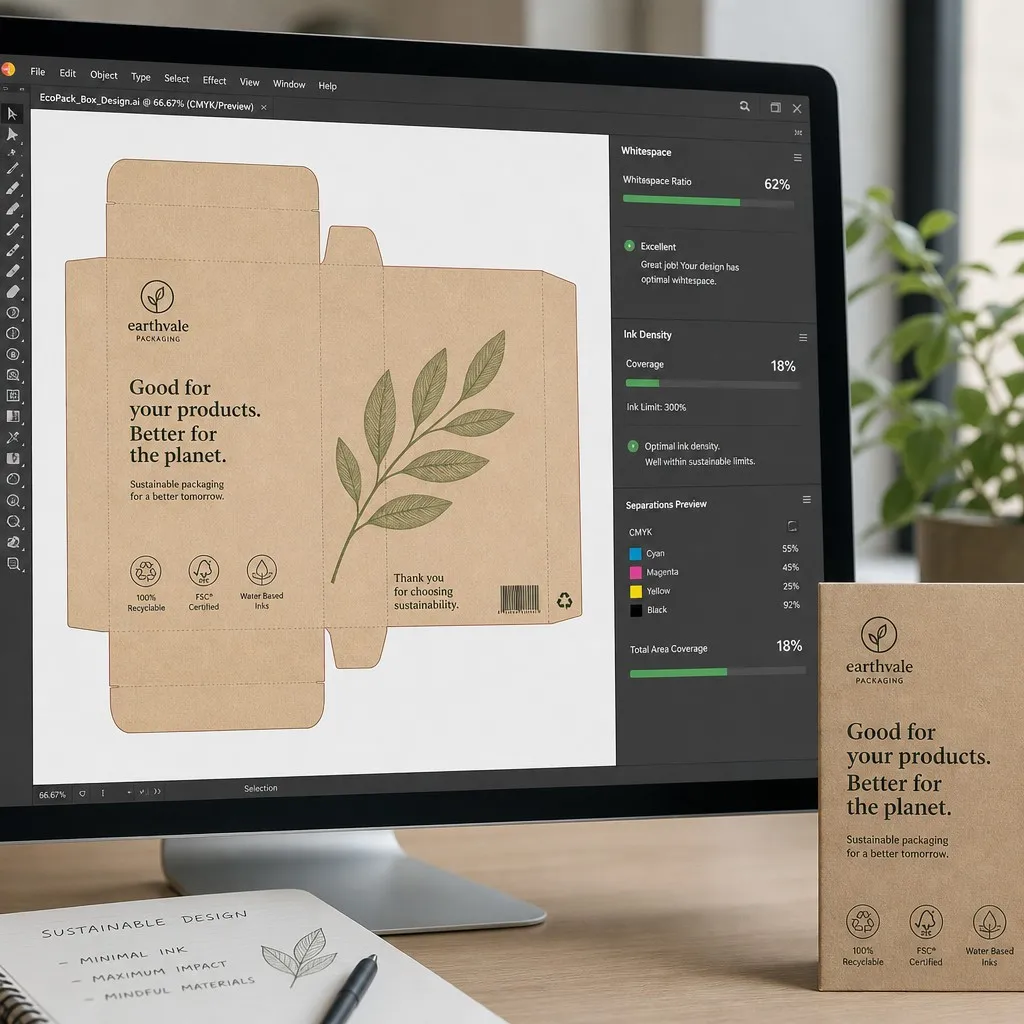
Minimizing waste starts with the digital file.
- Smart Prototyping: By using high-fidelity 3D mockups and digital proofing, brands like Weihua Packaging can finalize designs before a single sheet of paper is printed, eliminating the waste associated with multiple physical iterations.
- Print-Ready Optimization: Ensuring that files are perfectly set up for digital or soy-ink presses avoids the “ghosting” and errors that lead to scrapped print runs.
Conclusion
Transitioning to sustainable printing design is a strategic decision that aligns brand growth with environmental preservation. Through minimalist graphic design and technical optimization, your packaging can achieve a “natural luxury” status that resonates deeply with the eco-conscious market of 2026.
Adopting sustainable printing design is a journey, not a single decision. Start by auditing your current packaging: review ink coverage, substrate choices, and finishing processes line by line. Small refinements, such as switching to vegetable-based inks, eliminating lamination, or reducing box weight, deliver measurable environmental savings over every production run. Begin with a single pilot project—redesign one core product line using lower ink coverage, natural kraft substrates, and simpler structural forms. Measure the results, both the visual response from your customers and the reduction in printing costs. Weihua Packaging’s in-house designers work alongside your team to identify these opportunities, ensuring every packaging upgrade balances cost, durability, and ecological impact while preserving the minimalist aesthetic your customers love.
Ready to redefine your brand’s visual identity? Visit Weihua Packaging to discover our full range of sustainable printing design services and custom solutions.